Growing cucumbers in the UK is both rewarding and challenging. These crisp, refreshing vegetables not only enhance a variety of dishes but also bring life to your garden. However, the UK’s unique climate necessitates specific strategies for success. This comprehensive guide provides all the details you need to successfully cultivate cucumbers in your UK garden—from selecting the right variety and understanding the local climate to overcoming common challenges.
In a nutshell: sow seeds indoors in April, plant them in a greenhouse or a warm, sheltered spot outside once the frosts are over, give them something to climb, water them often, and pick cucumbers all summer long.
- DifficultyEasy, with regular watering
- Sow to harvestAbout 12 weeks
- WhereA greenhouse, or a sunny, sheltered spot
- Spacing45–60cm apart
- Grows toAbout 2m, climbing up a support
The growing year
When to grow it
Next: sow under cover from February
- Sow under cover: February to May
- Plant out: April to June
- Harvest: July to October
Before you start
What you'll need
- Cucumber seeds All-female varieties, like Merlin, are the easiest.
- Small pots and seed compost One pot per seed.
- A warm windowsill or heated propagator Cucumber seeds need 20–25°C to come up.
- A greenhouse, or a sunny, sheltered spot Most cucumbers crop best under cover; some do well outside in a warm summer.
- A big pot, grow bag or bed A pot at least 30cm across per plant, or two plants to a grow bag.
- A cane, string or trellis Cucumbers climb, so give them something to scramble up.
- Tomato feed A liquid feed for once the cucumbers start to form.
- A self-watering planter Optional: keeps up the steady water cucumbers love.
Step by step
How to grow cucumbers
April (March in a heated greenhouse)
Sow your seeds indoors
Fill small pots with seed compost and water them. Push one seed into each pot on its edge, about 1–2cm deep, and cover it over.
Keep them warm, at 20–25°C: a heated propagator or a warm windowsill is ideal.
Tip: One seed per pot: cucumbers don’t like their roots disturbed. Seeds sown on their edge are less likely to rot.
You'll know it's working when a pair of round, fleshy leaves pops up in about a week.
April to May
Keep them warm and bright
Keep the seedlings in a bright, warm spot, and water when the top of the compost feels dry. Water around the plant rather than over the stem.
If roots appear through the bottom of the pot before it’s warm enough to plant them, move them into a slightly bigger pot.
Tip: Cucumbers hate the cold. Don’t let them drop much below 15°C at night.
You'll know it's working when you have sturdy plants with three or four proper leaves.
Late April (greenhouse) or June (outdoors)
Plant them out
In a greenhouse, plant them into big pots, grow bags or the border from late April. Outside, wait until the frosts are over (usually early June), and harden them off for a week first.
Plant them 45–60cm apart in rich soil or compost, with a cane, string or trellis beside each one, and water them in well.
Tip: Plant so the top of the rootball sits just above the soil: cucumber stems rot if they sit in wet soil.
You'll know it's working when the plants start to climb within a week or two.
June to September
Help them climb
Tie the main stem loosely to its cane, or wind it around its string, as it grows. When it reaches the top, pinch off the tip.
Side shoots grow where each leaf meets the stem. Once a side shoot has a small cucumber on it, pinch off its tip two leaves further on. This keeps the plant tidy and the cucumbers coming.
Tip: Outdoor varieties can just scramble up a trellis or along the ground.
You'll know it's working when tiny cucumbers appear behind the yellow flowers.
June to September
Water and feed
Keep the compost evenly moist: cucumbers are mostly water, and they need plenty, especially in hot weather. In a greenhouse, that can mean every day.
Once the first cucumbers form, give them a tomato feed every week or two.
Tip: On hot days, open the greenhouse and wet the floor to keep the air humid. This is called damping down, and it keeps red spider mite away.
You'll know it's working when the leaves stay big and green, and new cucumbers keep forming.
July to October
Pick your cucumbers
Pick them while they’re firm and glossy, before they turn yellow. Mini varieties are ready at 10–15cm, full-size ones at about 30cm.
Cut them off with a knife or scissors, leaving a short stalk. Pick often: the more you pick, the more the plant makes.
Tip: A healthy plant can give you dozens of cucumbers over the summer, so check every couple of days.
You'll know it's working when the skin is firm and glossy, and the sides are straight.
Straight after picking
Eat them fresh
Homegrown cucumbers are crunchier and sweeter than shop-bought ones. Keep them somewhere cool and eat them within a week.
Gherkins can be pickled whole, and any cucumber can be sliced into a quick pickle.
Choosing what to grow
Which variety should I grow?
- All-female (greenhouse)They only grow female flowers, the ones that make cucumbers, so the fruit is never bitter. They crop most heavily in a greenhouse, conservatory or polytunnel. The easiest kind to start with.
- Mini cucumbersSmall, snack-sized cucumbers, often ready sooner. Great in pots.
- Outdoor cucumbersTougher plants for a sunny, sheltered spot outside, some with round or knobbly fruit, like lemon cucumbers.
- GherkinsSmall, firm cucumbers for pickling. Easy to grow outside.
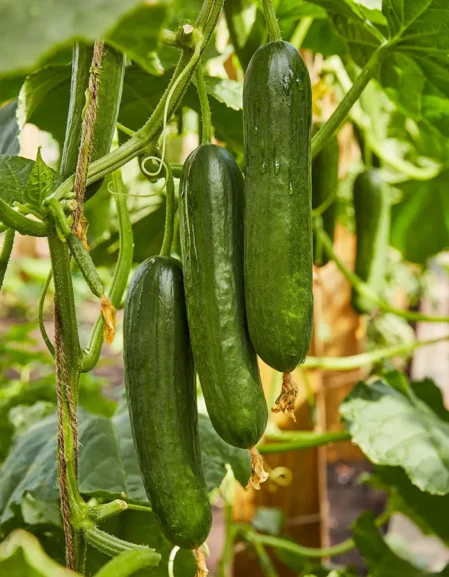 Best for beginnersCucumber Merlin F1All-female, so the cucumbers are never bitter, and easy even if you've never grown anything before. Our best seller.
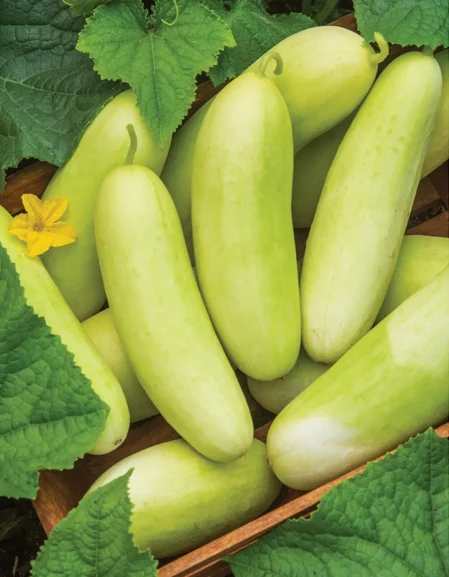 Cucumber Honey Plus F1Cucumber Honey Plus F1 is a early maturing variety (40 days), delivering 20-25 mini fruits (7-9 cm long).Ready in about 40 days
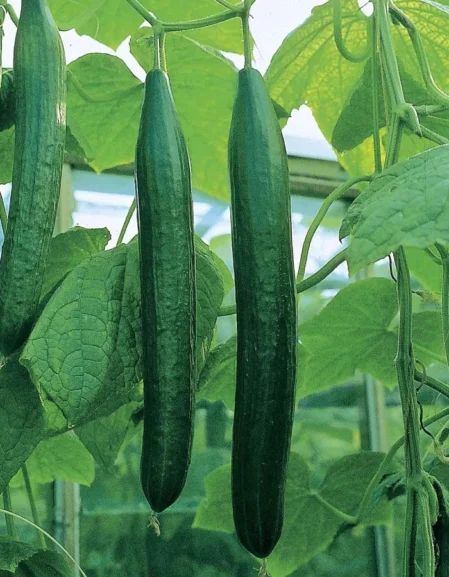 Cucumber Carmen F1 SeedsCucumber Carmen F1 is an RHS Award-winning variety favored by many, including Charles Downing.
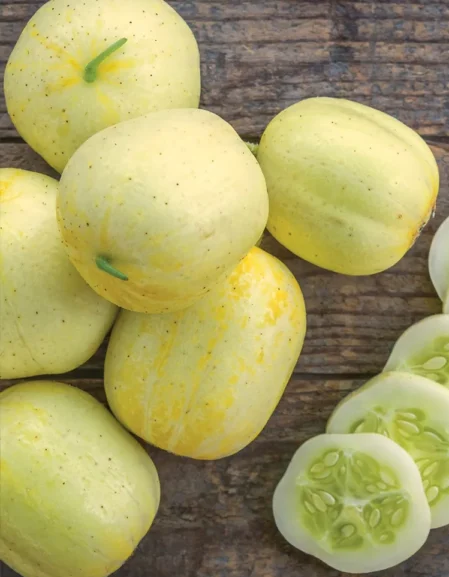 Crystal Lemon Cucumber SeedsCrystal Lemon Cucumber Seeds bring you a heritage variety with a twist.
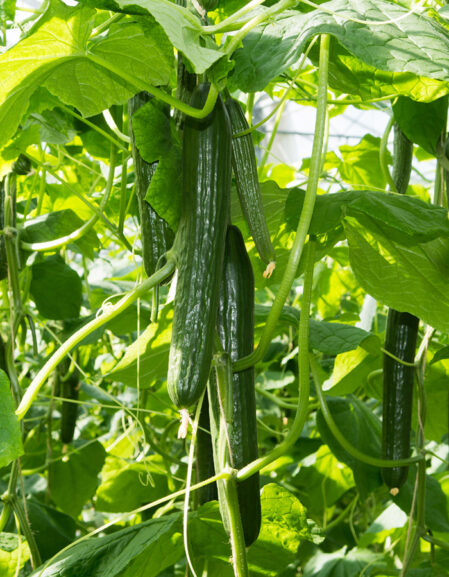 Cucumber Femspot F1 SeedsCucumber Femspot is a highly regarded greenhouse variety, prized by home growers for its heavy crops of smo…
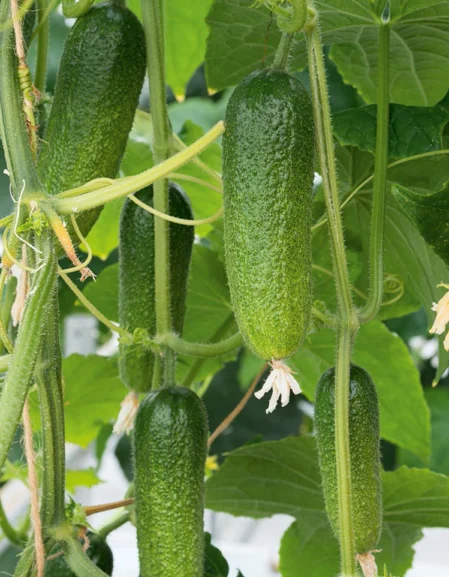 Gherkin Adam F1 SeedsProduces firm, uniform fruits ideal for pickling or adding to fresh salads.
Jargon buster
Words explained
- SowTo plant a seed.
- GerminateWhen a seed wakes up and starts to grow.
- PropagatorA covered tray, often heated, that keeps seeds warm while they germinate.
- All-femaleA variety that only grows female flowers, the ones that make cucumbers. No male flowers means no bitter fruit.
- F1A variety bred for strong, even, reliable plants. Seed saved from it won't grow true, so buy fresh each year.
- Harden offGetting plants raised indoors used to outdoor weather, a little more each day.
- Plant outTo move young plants into their final spot.
- Side shootA stem growing from where a leaf meets the main stem.
- Pinch offNipping off the tip of a shoot between finger and thumb.
- Damping downWetting a greenhouse floor on hot days, to cool the air and keep it humid.
- Powdery mildewA fungus that coats leaves in white powder, worst when plants are dry at the roots.
If things go wrong
Problems and fixes
Seedlings rotted or collapsed at the base
Why: Too cold and wet: cucumber stems rot easily.
What to do: Keep them warm, water around the plant rather than over the stem, and plant with the top of the rootball just above the soil.
The cucumbers taste bitter
Why: Stress from uneven watering or a cold spell, or, in older varieties, pollinated flowers.
What to do: Water evenly and keep them warm. Grow all-female varieties, or pick off the male flowers (the ones without a tiny cucumber behind them).
White powder on the leaves
Why: Powdery mildew, which strikes plants that are dry at the roots, usually in late summer.
What to do: Water regularly, give the plants space and air, and pick off the worst leaves. Some varieties, like Carmen, resist it.
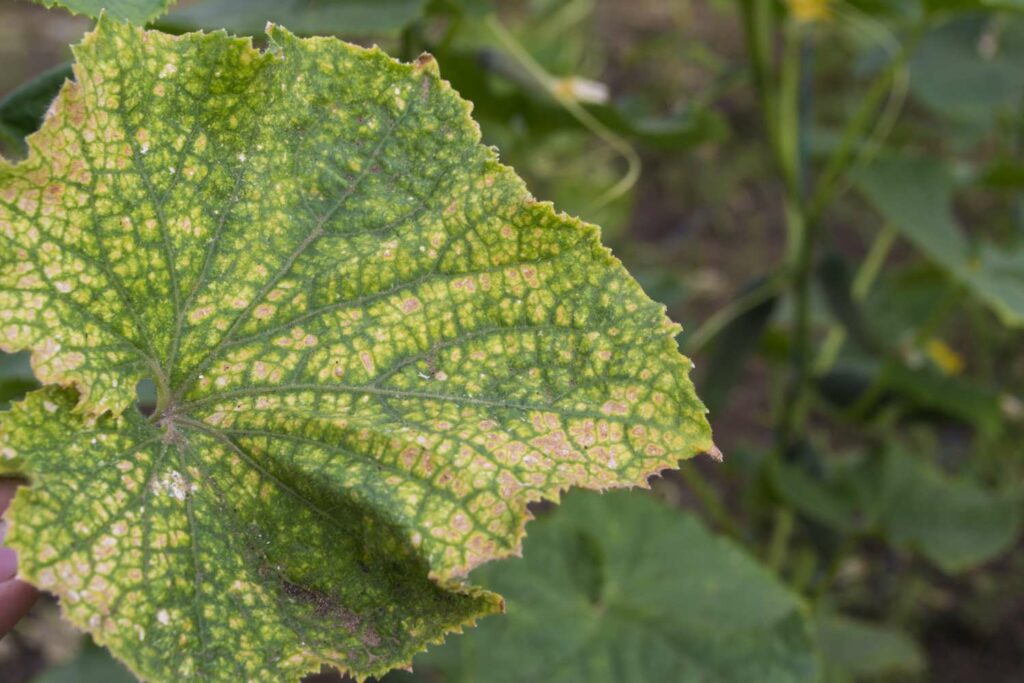
Pale, speckled leaves with fine webbing
Why: Red spider mite, which loves hot, dry greenhouses.
What to do: Damp down the greenhouse on hot days, mist the plants, and pick off badly affected leaves.
Lots of flowers but no cucumbers
Why: The plants are young, too cold, or (for older varieties) the flowers weren't pollinated.
What to do: Be patient with young plants and keep them warm. All-female varieties don't need pollinating.
Small cucumbers turn yellow and shrivel
Why: The plant is short of water or food, or carrying more than it can manage.
What to do: Water and feed regularly, and pick ripe cucumbers promptly so the plant can fill out the next ones.
Good to know
Questions people ask
Do I need a greenhouse to grow cucumbers?
No, though it helps. Greenhouse varieties crop most heavily under cover, and many do well on a sunny windowsill or in a conservatory. Outside, choose a warm, sheltered spot and plant out in June.
Can I grow cucumbers in pots?
Yes. Use a pot at least 30cm across (or two plants to a grow bag), give each plant a cane or trellis, and water often: pots dry out fast in summer.
How many cucumbers will I get from one plant?
Often 20 or more over a summer, depending on the variety and the weather. Picking regularly keeps them coming.
Should I remove the male flowers?
Only on older varieties that grow both kinds, as pollinated cucumbers can taste bitter. Female flowers have a tiny cucumber behind them; male flowers don’t. All-female varieties save you the job.
What grows well with cucumbers?
French marigolds planted nearby bring in hoverflies, whose young eat greenfly. Basil enjoys the same warm conditions.
More about growing cucumbers
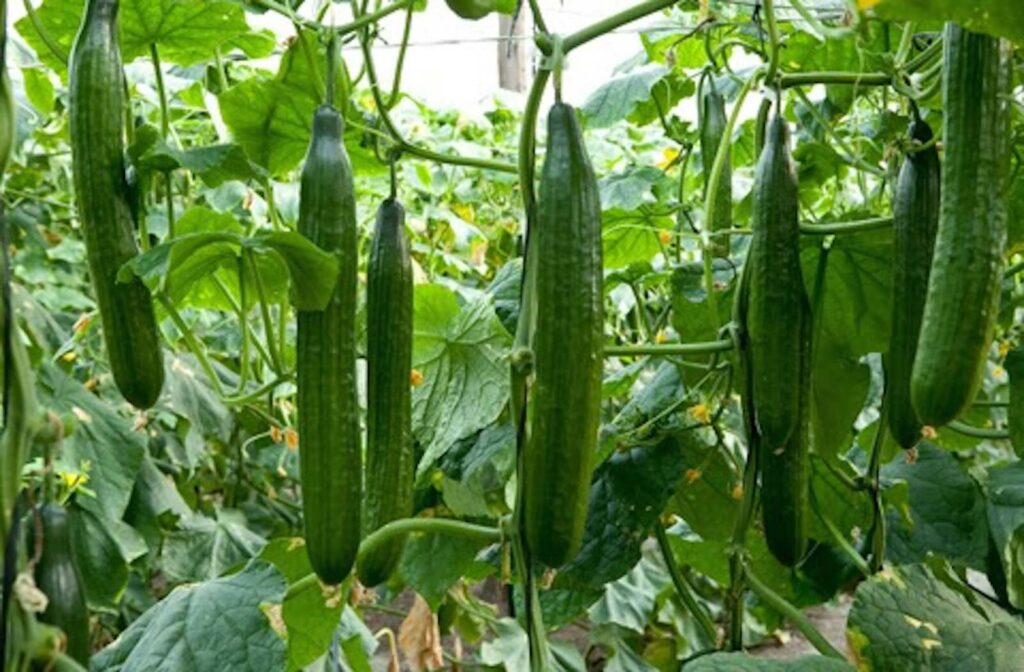
Understanding the UK Climate and Its Impact on Cucumber Growing
The UK’s climate, marked by mild temperatures and ample rainfall, poses particular challenges for growing heat-loving cucumbers. These conditions mean that understanding the local weather patterns is critical for gardening success.
Choosing the Right Cucumber Varieties for the UK
Selecting appropriate cucumber varieties is crucial:
- Outdoor Varieties: Varieties like ‘Marketmore’ are ideal for outdoor gardens as they resist mildew and can tolerate the UK’s cooler temperatures.
- Greenhouse Varieties: For greenhouse growers, ‘Carmen’ offers excellent yields and robust flavours, perfect for the controlled conditions of a greenhouse.
Starting Seeds Indoors
Begin your cucumber cultivation indoors to extend the growing season and protect young seedlings from late frosts.
- Timing: Initiate indoor seeding about 6-8 weeks before the last frost date.
- Methodology: Employ peat pots or seed trays with high-quality seed starting mix to encourage healthy early growth.
Preparing the Garden: Soil and Site Specifications
Cucumbers thrive in well-drained, fertile soil with a neutral pH. Proper site and soil preparation are key.
Soil Preparation
- Enhancement: Incorporate plenty of compost or well-rotted manure to enrich the soil.
- pH Adjustment: Ensure the soil pH is between 6.5 and 7.0 by testing and adjusting with lime if necessary.
Site Selection
Choose a sunny, protected area in your garden to help shield the plants from the wind and maximize sun exposure.
Planting Techniques for Optimal Growth
Transplanting seedlings outdoors requires careful timing and proper spacing.
- Planting Time: Wait until after the last frost and when the soil is warm.
- Spacing: Ensure there is about 50 cm between plants to allow ample growth room.
- Support: Install supports like trellises at planting to help vines climb and promote better air circulation.
Ongoing Care and Cultivation
Regular maintenance is crucial for healthy cucumbers.
- Watering Needs: Maintain consistent moisture in the soil, especially during dry spells.
- Nutrition: Apply a potassium-rich fertilizer every 4-6 weeks to support fruiting.
- Pruning Practices: Train vines onto supports and prune excess growth regularly.
Advanced Techniques for Season Extension
Extend your growing season using cloches, fleece, and other methods to protect early sowings from cold and encourage a longer harvesting period.
Using Cloches and Fleece
- Early Sowing Protection: Cover young plants with cloches or fleece to guard against unexpected frosts.
- Benefits: These protections can advance planting dates and extend the growing season.
Greenhouse Growing
- Temperature Control: Maintain an optimal climate within a greenhouse to encourage year-round growth.
- Pollination Assistance: Use manual pollination techniques if natural bee activity is low.
Pollination Essentials
Understanding pollination is key for fruit production.
- Bee Attraction: Encourage bees into your garden to aid in cucumber flower pollination.
- Self-Pollinating Varieties: Consider self-pollinating cultivars if bee populations are low.
Pest and Disease Management
Keep pests and diseases at bay with proactive measures.
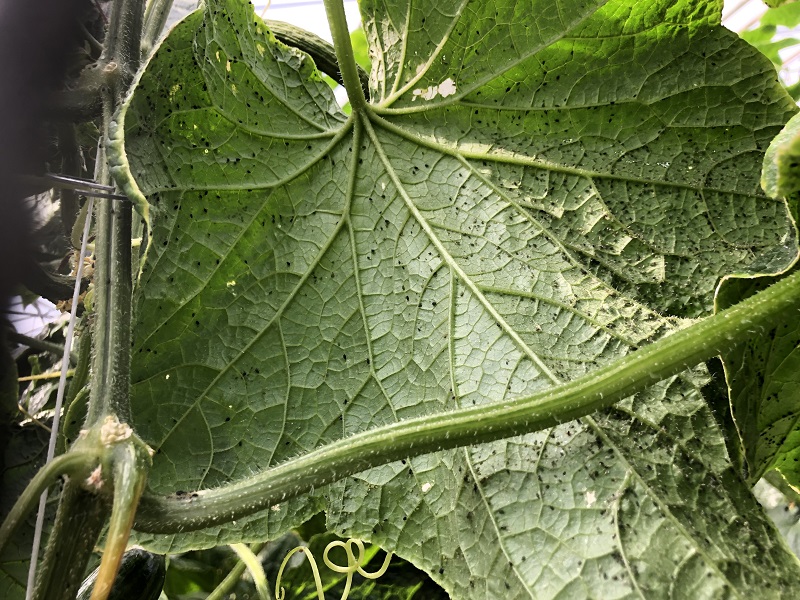
- Common Pests: Watch for aphids and spider mites, treating with insecticidal soap as necessary.
- Disease Prevention: Promote good airflow and use fungicides to prevent powdery mildew.
Common FAQs on Growing Cucumbers in the UK
Harvesting Tip
Cucumbers are ready to harvest when they are firm and the skin is a vibrant green without yellowing. Many gardeners prefer to harvest early in the morning, when the cucumbers are cool and crisp. Cut the fruits from the plant using secateurs or a sharp knife.
Some longer cucumber varieties can be cut in half while still on the plant and left to form a callus, so they can be used later.
What are the best companion plants for cucumbers?
Marigolds, peas, and beans are great companions, deterring pests and enriching the soil.
Maximizing Cucumber Yields in the UK
Growing cucumbers in the UK is highly achievable with careful planning and execution. By selecting the right varieties, preparing the site and soil correctly, and maintaining diligent care throughout the season, you can enjoy a productive harvest of crisp, delicious cucumbers. Each season offers new lessons and opportunities to enhance your gardening techniques, ensuring even greater success in the future. Happy gardening!
Ready to grow your own cucumbers?
Sow in spring for crunchy cucumbers all summer.