
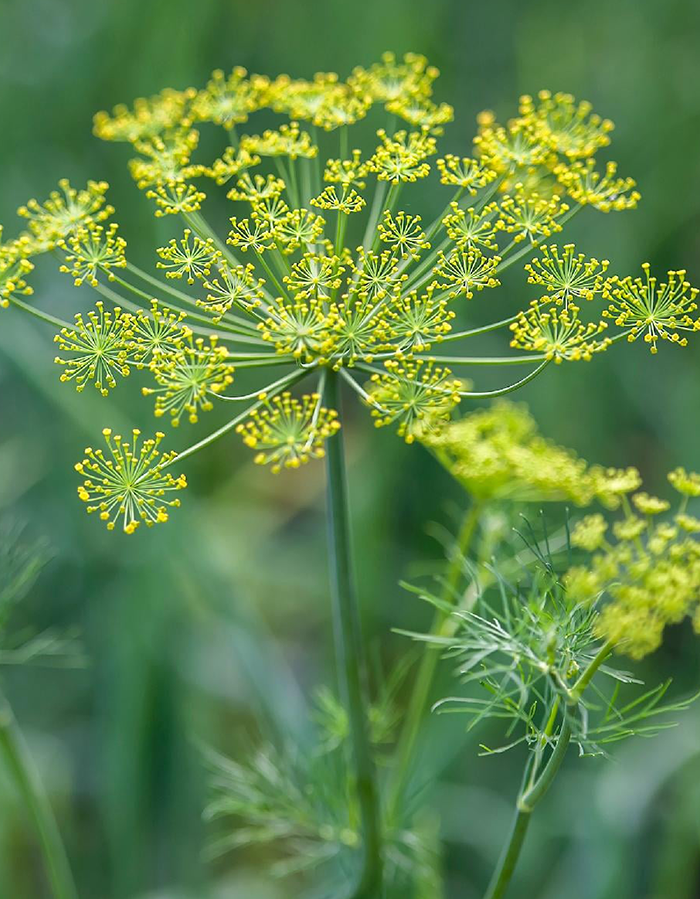
Dill Dukat Seeds
Anethum graveolens ‘Dukat’
£1.39
In stock
Free delivery on small seed packets when you spend £20 on seeds, otherwise £3.50 tracked.
Dill Dukat is a vigorous, leafy dill with fine, aromatic blue-green foliage, grown for its leaves, with edible flowers and seeds as well.
Average Packet Contents: 900 Seeds or 1g
Next: sow under cover from March See the growing calendar
When to grow it
- Sow under cover: March to April
- Direct sow: April to July
- Plant out: April to May
- Harvest: June to October
Why grow Dill Dukat?
Dukat is a vigorous, productive dill, grown mainly for its leaves. It makes an upright plant, usually somewhere between 50cm and 1m tall, with finely divided, blue-green leaves that have a strong scent, and flat heads of tiny yellow flowers in summer.
Nothing goes to waste. The leaves are for cooking, the flowers go into salads and jars of dill pickles, and the seeds flavour pickles, dressings and marinades. The flower heads can be cut for a vase too.
Where does dill grow well?
Dill likes a warm, sunny, sheltered spot with fertile, free-draining soil, and it’s hardy in much of the UK. It doesn’t like having its roots disturbed, so it usually does better sown where it’s to grow than moved later.
When and how do you sow dill?
Sowing period: Sow outdoors in small batches from mid-spring, once the soil has warmed, until midsummer.
Sowing depth: Make a drill about 1cm deep, sow thinly and cover.
Spacing: Leave 30cm between rows and thin the seedlings to about 20cm apart.
Germination: Seedlings usually appear in one to two weeks at 15°C or warmer.
Starting indoors: For an early start, sow in modules in spring and plant out from mid-spring, about four weeks after sowing and before the taproot forms. Harden the plants off first.
Successional sowing: Sow a small batch every few weeks for leaves into autumn.
How do you look after it?
Watering: Water in dry spells. Hot, dry weather pushes dill into flower early, and once it flowers it stops making new leaves.
Keeping it bushy: Pinch out the shoot tips and pick regularly.
Weeding: Keep the rows weeded while the seedlings are small.
Pests: Protect young plants from slugs and snails. Aphids sometimes gather on the leaves.
When and how do you pick dill?
Timing: You can start cutting leaves about six weeks after sowing.
Method: Take just a few leaves from young plants, and always leave at least a third of the plant in place.
Storage: Use the leaves soon after picking, or dry sprigs somewhere dark and well ventilated.
Seeds: Collect them in late summer or autumn once the heads are dry and brown. Hang the cut stems upside down in a paper bag until the seeds drop.
How can you use it?
Dill has a fresh, slightly aniseed flavour that suits:
- Fish: Salmon, smoked fish and prawns.
- Potatoes and eggs: New potatoes, potato salad and egg dishes.
- Pickles: Flowers and seeds in jars of pickled cucumbers.
- Dressings and sauces: Seeds in marinades and vinaigrettes, leaves in yoghurt or soured cream sauces.

Reviews
No reviews yet.