
 Good for pollinators
Scabious Ping Pong Seeds
Scabiosa stellata ‘Ping Pong’
£2.45
In stock
Free delivery on small seed packets when you spend £20 on seeds, otherwise £3.50 tracked.
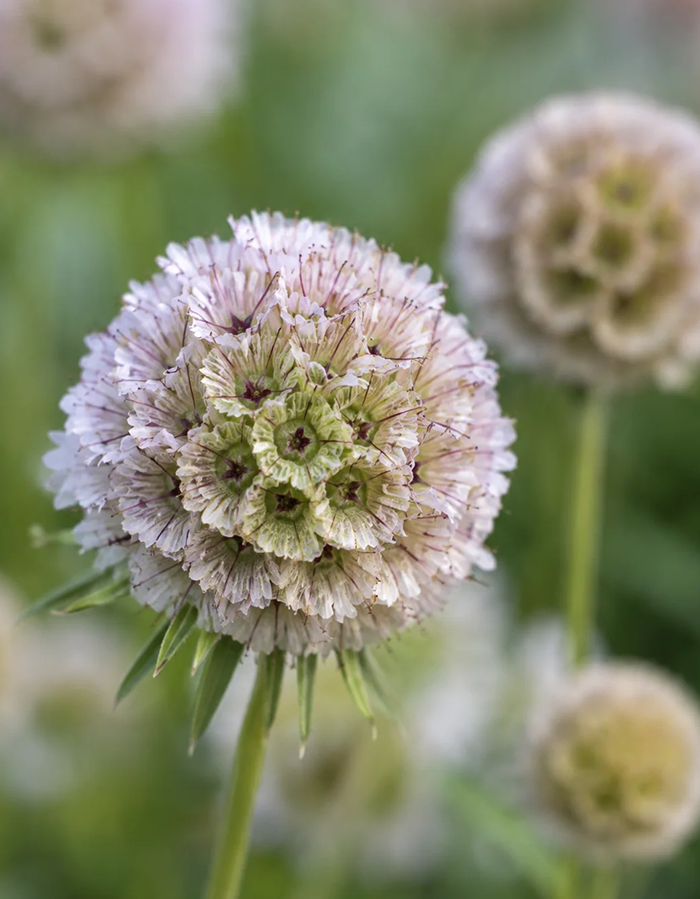
Scabious Ping Pong (Scabiosa stellata) is an annual scabious you grow as much for what follows the flowers as for the flowers themselves. Small, round heads of pale lavender fading to soft white open on thin, wiry stems from July. As they finish, each one turns into a papery globe, silvery at first and then creamy, with a dark star marking every tiny cup. Cut the flowers for small vases in summer, and leave some heads on the plant to dry for winter arrangements.
- Two looks in one: Pale lavender to white pincushion flowers, then silvery, papery seed heads.
- For cutting and drying: Fresh flowers for posies, and seed heads for dried, everlasting arrangements.
- Long season: In flower from July into October, if you keep deadheading.
- For pollinators: The flowers are visited by bees and other insects.
Average packet contents: 30 Seeds
Next: sow under cover from March See the growing calendar
When to grow it
- Sow under cover: March to April
- Direct sow: April to May
- Plant out: May to June
- Flowering: July to October
What is Scabious Ping Pong like?
Scabious Ping Pong is a selection of the starflower or drumstick scabious, an upright, branching annual from the honeysuckle family. Its small, globe-shaped flowers, pale lavender fading to soft white, sit on thin, wiry stems. As they fade, each one becomes a round, papery seed head, silvery and then creamy, made up of little cups that are each marked with a dark star. Plants usually reach somewhere between 45 and 90cm tall.
When should you sow scabious?
It’s safest to treat it as half hardy and keep young plants away from frost. You can start it two ways:
- Under glass: Sow in early spring in gentle heat, in trays or pots of moist, well-drained seed compost. At 18–21°C the seedlings usually come up in two to three weeks.
- Outdoors: Sow directly where it’s to flower in April and May, in shallow drills about 30cm apart.
Prick seedlings raised under glass out into individual pots once they’re big enough to handle, harden them off gradually, and plant them out once the risk of frost has passed.
Where should you plant it?
Full sun, in moderately fertile soil that’s moist but drains well. If your ground is heavy clay or holds water, work in some grit first. It’s at home in chalky, loamy or sandy soils that are neutral to alkaline. Space the plants about 30cm apart. It fits the middle of a border, cottage-style planting, a row in the cutting patch or a container.
How do you look after it?
- Watering: Water regularly until the plants are established, then only in dry spells.
- Deadheading: Pick off faded flowers through the summer to keep new ones coming.
- Seed heads: Towards the end of the season, stop deadheading and leave some flowers on the plant so the seed heads can form.
- Wind: On an exposed site, a little support helps keep the stems upright.
How do you use it for cutting and drying?
The flowers are a good size for small vases and posies through the summer. The seed heads are the part many people grow it for: cut, they keep their shape as dried, everlasting flowers and work well in a winter vase on their own or mixed with grasses.
Is it good for pollinators?
Yes. Bees and other pollinating insects visit the flowers, so a few plants in a border or cutting patch do some good beyond the vase.
The Grown Local Verdict “Scabious Ping Pong suits anyone who’d like summer flowers to cut and something to dry for winter from the same row. Raise it under glass or sow it outdoors in spring, give it sun and decent drainage, and leave some heads on the plant at the end of the season.”


Reviews
No reviews yet.