
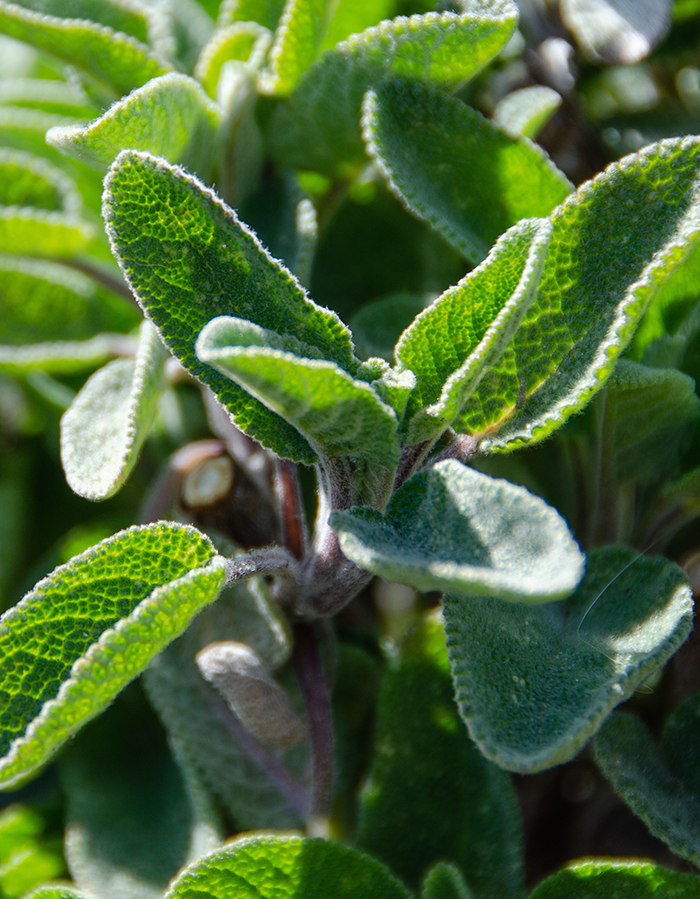
 Good for pollinators
Sage Seeds
Salvia officinalis
£1.29
In stock
Free delivery on small seed packets when you spend £20 on seeds, otherwise £3.50 tracked.
Common sage is a hardy, evergreen culinary herb with soft, grey-green aromatic leaves and blue summer flowers that bees visit.
Average Packet Contents: 100 Seeds
Next: sow under cover from March See the growing calendar
When to grow it
- Sow under cover: March to April
- Plant out: April to May
- Flowering: June to July
- Harvest: all year
Why grow sage from seed?
Common sage (Salvia officinalis) is a bushy, evergreen sub-shrub with strongly aromatic, grey-green, finely veined leaves, and short spikes of pale blue to purple flowers in early summer that bees visit. It’s hardy across the UK, even in hard winters, as long as its roots aren’t sitting wet.
A packet gives you enough plants for a herb bed, a low edging or a few pots. It does ask for patience: seed-raised plants usually take at least a year to reach a size worth picking from.
Where does sage grow well?
Sage needs full sun, a sheltered spot and free-draining soil that never becomes waterlogged. On heavy or poorly drained ground, grow it in a raised bed or a pot. In a container at least 30cm wide and deep, use peat-free soil-based compost with up to a quarter horticultural grit, and make sure there are plenty of drainage holes. It usually grows to about 75cm tall, and similar across.
When and how do you sow sage?
Sowing period: Sow indoors in spring.
Method: Sow in small pots or modules of moist seed compost and cover with a thin layer of fine compost.
Germination: In a propagator, or with a clear polythene bag over the pot on a warm windowsill, seedlings usually appear in about two weeks.
Growing on: Pot the seedlings on into larger pots as they grow, and keep them warm and bright.
Planting out: Once plants are at least 10cm tall and the soil is warming in spring, harden them off and plant them out at least 30cm apart, no deeper than they were growing.
How do you look after it?
Watering: Water during dry spells in its first year; after that, plants in the ground rarely need it. In pots, keep the compost slightly moist, not wet.
Pruning: Trim lightly in mid to late spring each year to keep it compact, and cut off faded flower stems in late summer. Don’t cut back into bare old wood, as it may not regrow.
Winter: Move pots to a sheltered spot out of the rain, such as against a wall, so the roots don’t rot, and fleece plants in hard weather.
Renewing: Plants tend to get woody and straggly after six or seven years, so replace them from cuttings or another sowing.
Pests: Rosemary beetles, sage leafhoppers and capsid bugs may mark the leaves but rarely do much harm; pick off any affected leaves.
When and how do you pick sage?
Timing: Once established, you can pick at any time of year, though spring and summer growth has the fuller flavour.
Method: Take whole young shoots or single leaves as you need them.
Storage: Hang sprigs to dry somewhere warm, dark and airy and keep the dried leaves in an airtight jar, or freeze chopped leaves in ice-cube trays.
How can you use it?
Sage has a strong, savoury flavour, so a few leaves go a long way:
- Stuffing: The classic partner for onion in stuffing.
- Meat: With pork, sausages, liver and roast chicken.
- Butter: Leaves fried in butter for pasta, gnocchi or roast squash.
- In the garden: Leave some shoots to flower for the bees.

Reviews
No reviews yet.