
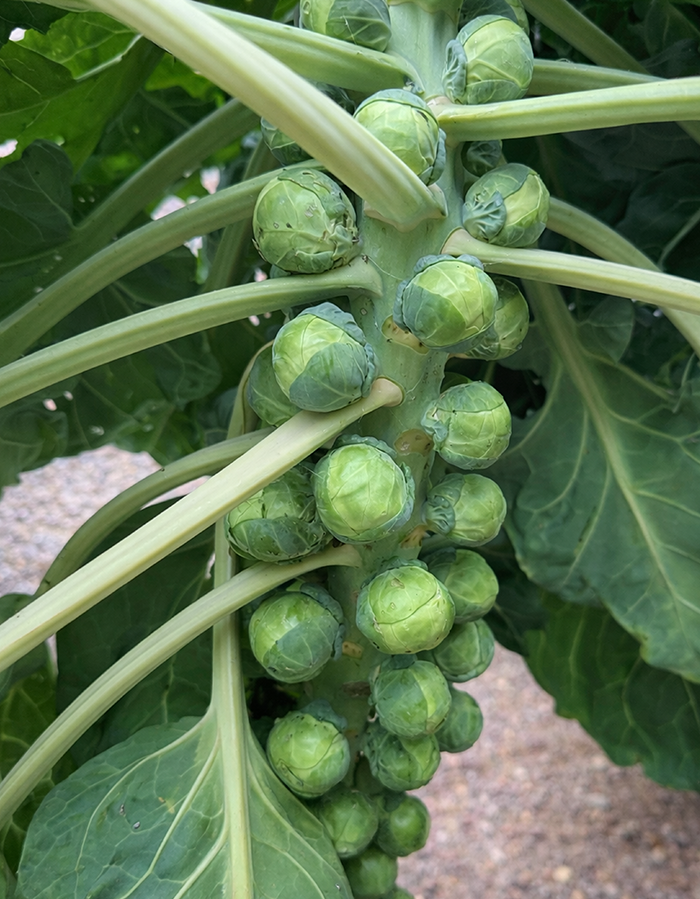
Brussels Sprout Trafalgar F1 Seeds
Brassica oleracea ‘Trafalgar’ F1
£1.49
In stock
Free delivery on small seed packets when you spend £20 on seeds, otherwise £3.50 tracked.
Brussels Sprout Trafalgar F1 is a reliable mid-to-late season hybrid specifically bred to suit the British climate. While no vegetable is “bitter-free,” this variety is noticeably milder and sweeter than older heritage types, making it a practical choice for family meals. It is a sturdy plant with a strong root system, designed to stand through the cold winter months while holding its buttons firm for a steady harvest.
- Consistent Harvest: Usually ready for picking from mid-November through to January.
- Mild Palate: Bred for a sweeter flavour profile that lacks the harshness of traditional varieties.
- Winter Hardy: A robust hybrid that can withstand typical UK frost and rain.
- Stable Growth: Stronger stems help the plant stay upright in exposed gardens.
Average packet contents: 25 Seed
Next: sow under cover from February See the growing calendar
When to grow it
- Sow under cover: February to April
- Direct sow: March to April
- Plant out: April to June
- Harvest: November to March
Brussels Sprout Trafalgar F1: A Dependable Hybrid for the Winter Plot
Brussels Sprout Trafalgar F1 is a staple for many UK kitchen gardens because it manages the transition from autumn to winter reliably. As a modern F1 hybrid, it offers more uniformity than older varieties, but it still requires a long growing season and proper care to reach its full potential. It is particularly valued for its “holding” ability, meaning the sprouts stay firm on the stalk for several weeks rather than opening up all at once.
Practical Sowing and Establishing
To get a decent crop from Brussels Sprout Trafalgar F1, you must start early. Sow your seeds from March to April. We recommend using modular trays; this allows the seedlings to develop a strong, undisturbed root ball before they face the elements. Brussels sprouts are “hungry” plants, so they need a sunny spot with firm, fertile soil that has been enriched with organic matter.
The Importance of Firming In
One of the most common issues with sprouts is “blown” buttons—where the sprouts stay loose and leafy rather than forming tight balls. While Brussels Sprout Trafalgar F1 is bred to resist this, it can still happen if the soil is too loose. When you transplant your seedlings in May or June, you must use your heel to firm the soil down hard around the roots. This physical stability is what encourages the plant to produce the tight, firm sprouts you expect.
Maintenance and Pest Protection
Because Brussels Sprout Trafalgar F1 stays in the ground for up to 30 weeks, it is a target for pests. We advise using fine netting or mesh from day one to keep off cabbage white butterflies and pigeons. In late autumn, as the plants get taller, it is wise to stake them or mound soil up around the base to prevent “wind-rock,” which can damage the roots and reduce your yield.
Harvesting and Kitchen Quality
Harvesting typically begins at the bottom of the stalk in late November or December. The flavour of Brussels Sprout Trafalgar F1 is best after the first few frosts, which helps convert the starches in the buttons into sugars. While it is a sweet variety, overcooking will still bring out a sulphurous taste, so we recommend steaming or pan-frying until just tender. This variety is a solid, workmanlike performer that provides a reliable harvest for the winter table without the fuss of more temperamental types.
The Grown Local Verdict “Brussels Sprout Trafalgar F1 is a sensible, middle-of-the-road variety that takes much of the risk out of sprout growing. It isn’t a ‘set and forget’ plant—it needs firm soil and protection from birds—but if you give it the basics, it will provide a consistent supply of sweet, firm sprouts throughout the coldest months of the year.
Reviews
No reviews yet.