
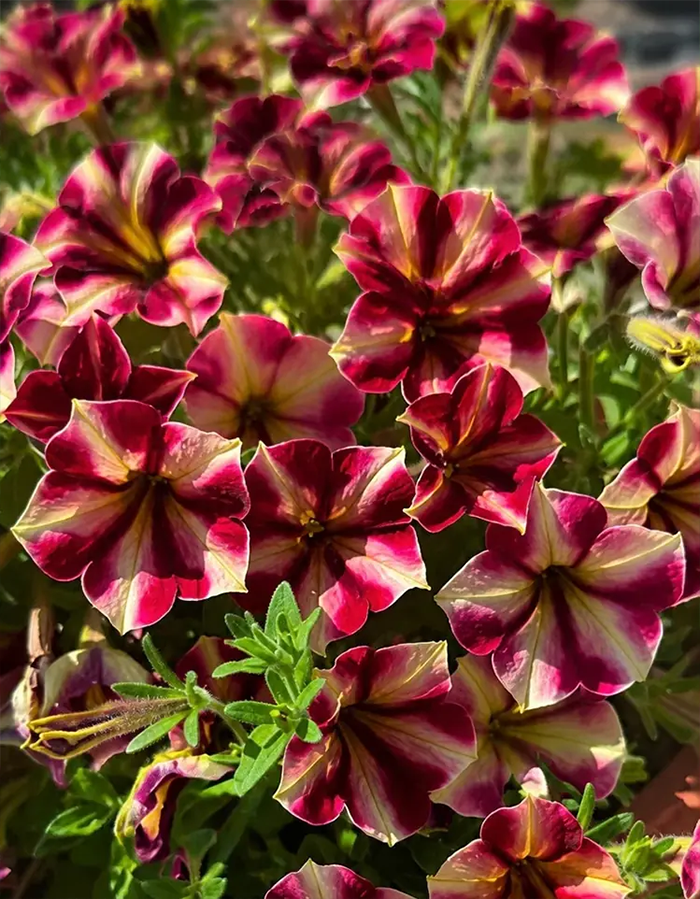
Petunia F1 Can Can Harlequin Burgundy/Yellow
Petunia × hybrida ‘Can Can Harlequin Burgundy/Yellow’ F1
£1.85
In stock
Free delivery on small seed packets when you spend £20 on seeds, otherwise £3.50 tracked.
Petunia F1 Can Can Harlequin Burgundy/Yellow (Petunia x hybrida) is a large-flowered F1 petunia. Its flowers are 8–10cm across, burgundy marked with a paler star, on compact plants up to about 25cm tall, and it tends to cope well with poor weather. Like all petunias it’s frost tender, so it’s sown indoors in late winter or spring and planted out once the frosts are over, then flowers from summer until the first frosts of autumn. Grow it in pots, window boxes, hanging baskets or summer bedding, and it’ll keep going all season if you feed and deadhead it.
- Big flowers: Burgundy flowers 8–10cm across, marked with a paler star.
- Compact: Low plants, up to about 25cm tall.
- Long season: Flowers from summer until the frosts with regular feeding and deadheading.
- Where to grow it: Pots, window boxes, hanging baskets and summer bedding.
Average packet contents: 20 Seeds
Next: sow under cover from February See the growing calendar
When to grow it
- Sow under cover: February to April
- Plant out: May to June
- Flowering: June to October
How do you grow Petunia F1 Can Can Harlequin Burgundy/Yellow?
Petunia F1 Can Can Harlequin Burgundy/Yellow is a large-flowered F1 petunia, with burgundy flowers 8–10cm across, marked with a paler star, on compact plants up to about 25cm tall. Petunias are frost tender, so in the UK they’re grown as half-hardy annuals: raised indoors in spring, planted out once the frosts are over, and in flower from summer until the first frosts of autumn. Grown in pots, window boxes or summer bedding, they keep going all season if you feed and deadhead them.
When should you sow petunia seed?
- When to sow: Indoors, from late February to April.
- How to sow: Sow thinly on the surface of free-draining seed compost; a little vermiculite or perlite mixed in helps. Petunia seed needs light to germinate, so don’t bury it. At most, give it a very light dusting of vermiculite.
- Warmth: Keep the tray at around 20–24°C, in a propagator or under a clear polythene bag, until the seedlings are up.
- Germination: Seedlings usually appear in 7 to 21 days.
How do you grow the seedlings on?
- Pricking out: Move the seedlings into individual pots once they have two true leaves.
- Growing on: Keep them somewhere cool, bright and frost-free, such as a cold frame.
- Planting out: Harden them off over one to two weeks, then plant out once the risk of frost has passed, usually from the end of May or in June.
- Spacing: Allow 15–20cm for compact, upright plants and about 30cm for bushier, mounding ones; trailing petunias need around 40cm. In pots and window boxes you can plant them closer together.
How do you keep petunias flowering?
- Watering: Don’t let the compost dry out. Water the soil rather than the leaves, early in the morning or in the evening.
- Feeding: Every 10–14 days, give a liquid feed high in potash, such as tomato feed. If the plants tire by autumn, switching to a higher-nitrogen feed for the last few weeks can help.
- Deadheading: Pick off faded flowers regularly to keep new ones coming.
What pests should you look out for?
Aphids on young growth are common and usually nothing to worry about. Slugs and snails are the bigger problem, especially for plants in the ground. Grow your plants on to a good size before planting them out, and protect them with barriers or a wildlife-friendly bait.
Can you keep a plant for next year?
Seed saved from petunias may not come true, so fresh seed each spring is the reliable way to get the same flowers again. If there’s a plant you’d like to keep, take softwood cuttings in late summer and overwinter them indoors on a windowsill.
The Grown Local Verdict “Petunia F1 Can Can Harlequin Burgundy/Yellow brings burgundy and yellow to pots, window boxes and summer bedding. Sow it on the surface in spring, keep it warm until it’s up, plant it out after the frosts, and feed and deadhead it through the summer.”


Reviews
No reviews yet.