
 RHS Award of Garden Merit
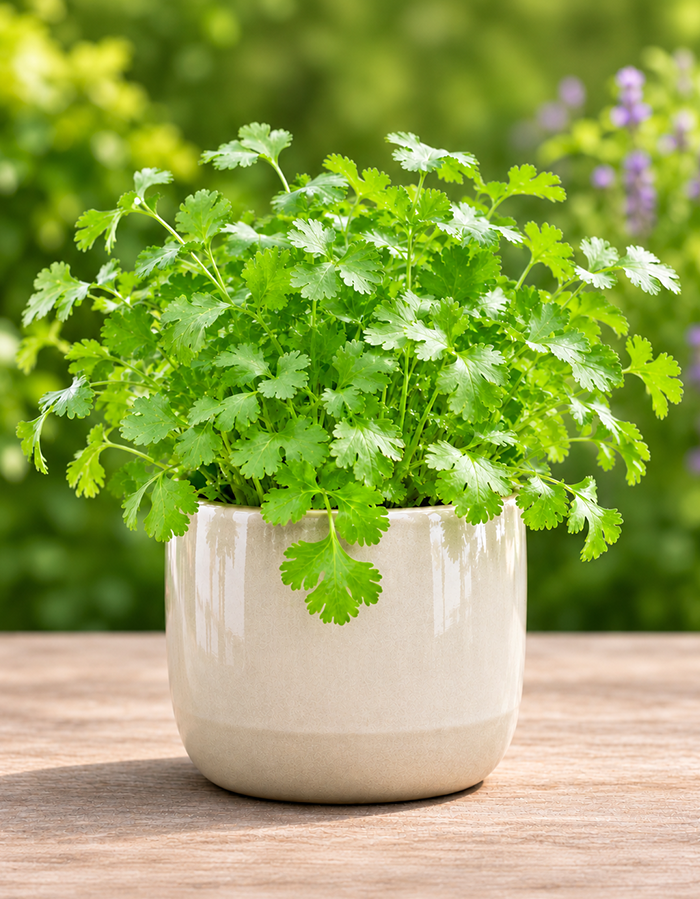
Coriander Calypso Seeds
Coriandrum sativum ‘Calypso’
£1.39
In stock
Free delivery on small seed packets when you spend £20 on seeds, otherwise £3.50 tracked.
Coriander Calypso is bred to be slow to bolt, and its low growing point lets you cut it and leave it to regrow for a longer run of leaves.
Average Packet Contents: 200 Seeds
Next: sow under cover from February See the growing calendar
When to grow it
- Sow under cover: February to March
- Direct sow: April to September
- Plant out: April to May
- Harvest: May to October
Why grow Coriander Calypso?
Coriander tends to run to seed just when you want leaves, especially in hot, dry weather. Calypso was bred to be slower to bolt, and in its breeder’s own trials it held on for around three weeks longer than a standard variety. That gives you a longer picking season, which you’ll notice in summer.
It makes an upright clump of fairly large, aromatic, bright green leaves, usually under 50cm tall, with small white flowers in summer if you let it flower. Its growing point sits very low on the plant, so you can cut the leaves and leave it to grow back for another picking. The leaves, flowers and seeds are all edible. It copes with cool weather but won’t survive being frozen, which is why autumn sowings need a cloche or greenhouse.
Where does coriander grow well?
Coriander likes a sunny or lightly shaded spot with free-draining soil. For summer sowings, choose a cooler place out of the midday sun, which helps keep the plants in leaf for longer. It also grows well in containers, as it likes the free drainage; just remember that pots dry out faster than the ground.
When and how do you sow coriander?
Sowing period: Sow indoors on a warm, sunny windowsill from February, or outdoors from spring into autumn.
Sowing depth: Sow in a shallow drill, cover lightly and water gently.
Spacing: The seeds are big enough to place one at a time, about 5cm apart. Plants raised indoors go out about 10cm apart once hardened off.
Germination: Expect seedlings in one to three weeks outdoors, depending on the weather, or two to three weeks indoors.
Successional sowing: Sow a small batch about once a month. An autumn sowing under a cloche or in a greenhouse can keep you picking into early winter.
How do you look after it?
Watering: Plants in the ground rarely need watering except in long dry spells, but don’t let them go short, as dry soil pushes coriander into flower. Check pots daily in warm weather and keep the compost just moist.
Bolting: If you want leaves, pinch out flower stems as soon as they appear.
Cold weather: If it’s still cold when you plant out, cover the plants with a cloche or fleece.
Pests: Coriander is generally trouble-free, but protect young seedlings from slugs and snails.
When and how do you pick coriander?
Timing: Coriander grows quickly, and the first leaves can be ready about 10 weeks after sowing. Start once plants are 10–15cm tall.
Method: Take a few leaves from each plant, then give it about two weeks to recover before you pick it again. You should get several pickings before it flowers.
Seeds: If you leave a few plants to flower, the green seeds are milder and can be eaten fresh; ripe ones turn brown. Cut the stems into a paper bag, dry them for about a week in a warm room, then keep the seeds in an airtight jar.
How can you use it?
Coriander’s leaves, flowers and seeds all have a place in the kitchen:
- Leaves: Stir into curries, salsas, noodle dishes and salads, adding them at the end so they keep their flavour.
- Flowers: Scatter the small flowers over salads.
- Seeds: Use green seeds fresh, or grind the dried brown seeds for spice mixes.
- Microgreens: Sown thickly indoors, it can be cut as microgreens after about two weeks.
Reviews
No reviews yet.