
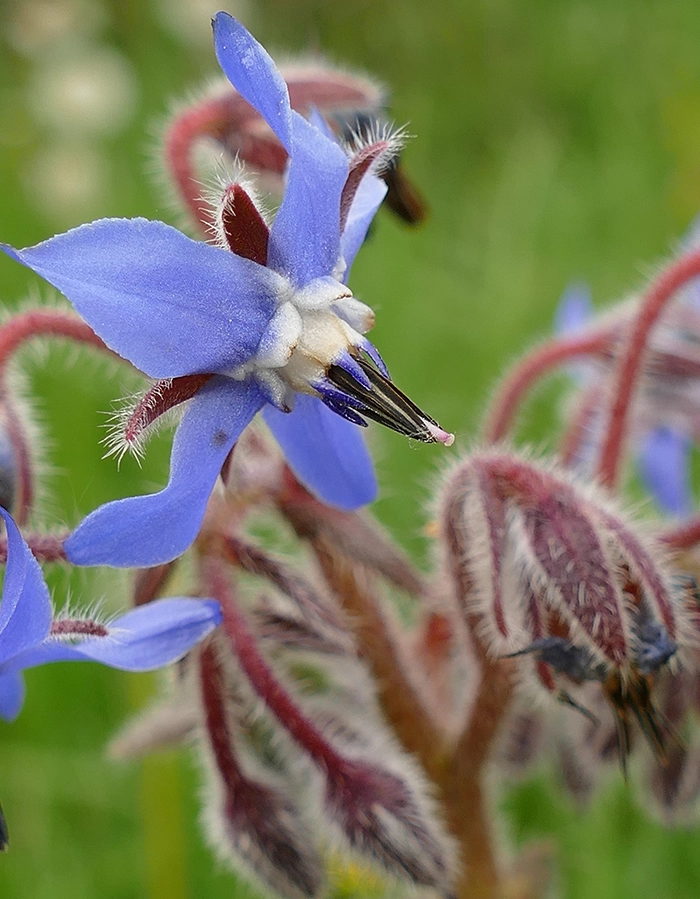
 Great for pollinators
Borage Seeds
Borago officinalis
£1.29
In stock
Free delivery on small seed packets when you spend £20 on seeds, otherwise £3.50 tracked.
Borage (Starflower) produces vivid blue, star-shaped flowers and aromatic leaves, offering culinary uses and vital support for pollinators.
Average Packet Contents: 50 Seeds
Next: sow under cover from March See the growing calendar
When to grow it
- Sow under cover: March to April
- Direct sow: March to June
- Plant out: April to June
- Flowering: June to October
- Harvest: June to October
Grow Borage – A Versatile Herb and Wildflower Loved by Pollinators
Borage, also known as starflower, is a hardy annual celebrated for its vivid blue, star-shaped flowers and its many uses in the garden and kitchen. Its bright blooms attract a wide range of pollinators, especially bees and butterflies, making it a valuable addition to wildlife gardens and wildflower meadows.
With a long history in herbal and culinary traditions, Borage leaves and flowers are used in salads, drinks, and garnishes. The plant’s attractive appearance and its ability to thrive in less-than-perfect soil make it a favourite among amateur gardeners.
Growing Borage
Borage thrives in full sun and well-drained soil. It is well-suited to herb beds, borders, wildlife gardens, or containers and is known for naturalising easily.
Sowing and Planting
Sowing Period: Sow seeds directly outdoors from March to May once the risk of frost has passed.
Soil Preparation: Remove stones and debris, loosening the soil to create a fine, well-drained seedbed.
Sowing Depth: Sow seeds 1 cm deep into moist soil.
Spacing: Sow thinly and thin seedlings to 25–30 cm apart once established.
Germination: Expect seedlings to emerge within 7–14 days in warm conditions.
Care and Maintenance
Watering: Keep the soil moist during establishment. Once established, Borage is drought-tolerant and requires minimal watering.
Weeding: Remove weeds regularly to reduce competition.
Thinning/Dividing: Not required, though self-seeded plants can be moved if desired.
Picking
Timing: Begin picking leaves and flowers once plants are well established, typically from early summer.
Method: Use scissors to snip leaves and flowers as required. Picking encourages fresh growth.
Storage: Use fresh or freeze flowers and leaves for later use.
Culinary and Garden Uses
Borage offers both culinary appeal and garden beauty:
- Culinary: Flowers are used to garnish salads, drinks, and desserts. Young leaves add a mild cucumber-like flavour to salads and sauces.
- Wildlife gardens: Supports a wide range of pollinators, particularly bees.
- Companion planting: Borage is known to attract beneficial insects and is often planted alongside fruit and vegetable crops.
Reviews
No reviews yet.